Buy softwarenews.net ?
We are moving the project
softwarenews.net .
Are you interested in purchasing the domain
softwarenews.net ?
domain@kv-gmbh.de · 0541-91531010
Buy softwarenews.net ?
How do you calculate the braking distance, the braking process, and the braking deceleration?
The braking distance can be calculated using the formula: braking distance = (initial velocity^2) / (2 * deceleration), where the deceleration is the rate at which the vehicle slows down. The braking process involves the driver applying the brakes, which causes friction between the brake pads and the wheels, leading to a decrease in the vehicle's speed. The braking deceleration can be calculated by dividing the change in velocity by the time it takes for the vehicle to come to a complete stop. **
How do you calculate the braking time and braking distance?
Braking time and braking distance can be calculated using the formula: Braking distance = (initial velocity^2) / (2 * deceleration) Where initial velocity is the speed of the vehicle before braking, and deceleration is the rate at which the vehicle slows down. Braking time can be calculated by dividing the braking distance by the initial velocity. These calculations are based on the assumption of constant deceleration, and may vary depending on factors such as road conditions and the vehicle's braking system. **

Similar search terms for Braking
Top-Angebote
Products related to Braking:
-
Universal Innovations Sahara Standard Patio Heater CoverKeep your patio heater protected from the elements all year round with a durable all-weather cover.The Sahara Patio Heater Cover is made from a heavyweight material and includes a waterproof inner lining, making it water and fire retardant. It has a full-length zip for easy fitting. Using thiscover will help to keep the gas nozzle and venturi free from dust and insects. This patio heater cover is the perfect companion for your 13kW Sahara Patio Heater and is suitable for most standard-sized patio heaters.43,56 £*Shipping: 5,00 £Secure redirect to the provider
-
EaseUS Data Recovery Wizard 18 ProEaseUS Partition Master 18.0 Professional is a powerful and versatile tool for partition management on Windows systems. Designed for home and professional users, this software offers a range of advanced features to optimise hard disk usage and improve system performance. Key Features Complete Partition Management: Create, resize, move, merge, delete and hide partitions with ease. EaseUS Partition Master allows you to manage partitions without data loss, ensuring a smooth and secure experience. Disk Cloning: Clone entire disks or individual partitions to easily transfer data from one drive to another. This function is especially useful when upgrading to new hard disks or SSDs. Partition Recovery: Recovers partitions lost or damaged as a result of accidental deletions, Windows upgrades or virus attacks. The recovery function is quick and easy, allowing data to be restored in just a few clicks. Performance Optimisation: Supports 4K alignment of SSD partitions to improve read and write performance, ensuring your system performs at its best. Advanced Conversion: Convert disks and partitions between MBR and GPT without formatting, making it easy to upgrade to Windows 11 and manage large disks. File System Check and Repair: Quickly checks the file system for errors and bad sectors, restoring disk functionality efficiently. Bootable Media Creation: Create WinPE bootable media to solve system boot problems or perform partition management tasks without booting Windows. Intuitive Interface: The user interface is designed to be simple and intuitive, making access to all features easy even for novice users. Why Choose EaseUS Partition Master 18.0 Professional? EaseUS Partition Master 18.0 Professional stands out for its combination of advanced functionality and ease of use. It is an ideal solution for anyone who wants to manage their disks effectively, whether they are home users or IT professionals. Competitively priced and with free updates for life, it is an excellent investment for optimising data management. Choose EaseUS Partition Master 18.0 Professional for stress-free partition management and to ensure that your system is always running at peak capacity. Don't let disk management become a hassle; trust EaseUS for a complete and reliable solution.55,90 £*Shipping: 0,00 £Secure redirect to the provider
-
HP Ultrium 6 LTO Data Cartridge PurpleLTO Ultrium 6 data cartridge with 6.25 TB compressed capacity and 846 m tape length, featuring Metal Particle technology for reliable long-term data storage. Compatible with HP StoreEver and MSL library systems. Includes write-on labels and comes with a limited lifetime warranty.66,49 £*Shipping: 0,00 £Secure redirect to the provider




-
What are the differences between braking to walking speed and braking?
Braking to walking speed typically involves gradually reducing speed until coming to a complete stop, whereas braking refers to the act of slowing down a moving vehicle. When braking to walking speed, the goal is to smoothly decelerate without any sudden stops, while braking may involve more forceful actions to slow down quickly. Additionally, braking to walking speed is often used in situations where a vehicle needs to stop at a precise location, such as at a crosswalk or intersection. **
-
How do you calculate braking time and braking distance in physics?
In physics, braking time and braking distance can be calculated using the equations of motion and the principles of kinematics. The braking time can be calculated using the equation t = v/u, where t is the braking time, v is the final velocity, and u is the initial velocity. The braking distance can be calculated using the equation d = (v^2 - u^2) / (2a), where d is the braking distance and a is the deceleration. These equations take into account the initial and final velocities, as well as the deceleration of the object to determine the braking time and distance. **
-
Is braking a reflex?
Braking can be considered a reflex in certain situations. When a driver reacts to a sudden obstacle or hazard on the road by immediately pressing the brake pedal, it can be seen as a reflexive action. This is because the response is automatic and occurs without conscious thought. However, braking can also be a learned behavior, as drivers are trained to use their brakes in specific situations through practice and experience. Therefore, while braking can be a reflex in some cases, it can also be a learned and intentional action. **
-
What is the formula for braking acceleration and braking time in physics?
The formula for braking acceleration is given by \( a = \frac{v_f - v_i}{t} \), where \( a \) is the braking acceleration, \( v_f \) is the final velocity, \( v_i \) is the initial velocity, and \( t \) is the time taken to come to a stop. The formula for braking time can be calculated using the equation \( t = \frac{v_f - v_i}{a} \), where \( t \) is the braking time. These formulas are used to calculate the rate at which an object slows down when braking. **
What is the difference between a full braking and an emergency braking?
Full braking refers to applying the brakes with maximum force in a controlled manner to slow down or stop the vehicle. This can be done in response to normal traffic conditions or when approaching a stop sign or traffic light. On the other hand, emergency braking is a sudden and forceful application of the brakes in response to an unexpected hazard or danger, such as a pedestrian stepping into the road or a vehicle suddenly stopping in front. Emergency braking is typically done to avoid a collision and requires quick reflexes and a strong, immediate response from the driver. **
What is the difference between braking with a clutch and braking without?
Braking with a clutch involves pressing the clutch pedal while simultaneously applying the brakes, which disengages the engine from the transmission and allows the vehicle to coast to a stop. This method is often used in manual transmission vehicles to prevent stalling. On the other hand, braking without using the clutch means simply applying the brakes without disengaging the engine from the transmission, which can cause the vehicle to stall if the engine speed drops too low. In summary, the main difference is that braking with a clutch allows the vehicle to coast to a stop without stalling, while braking without the clutch can potentially lead to stalling if not done properly. **
Top-Angebote
Products related to Braking:
-
United Charger & Smartwatch Data Cable Replacement Charger & Smartwatch Data Cable ReplacementKeep your Garmin 920XT charger ready whenever adventure calls. Designed for athletes, runners, and fitness enthusiasts, this replacement charger ensures your Forerunner 920XT stays powered and connected. Its durable smartwatch charging cable offers...39,97 $*Shipping: 0,00 $Secure redirect to the provider
-
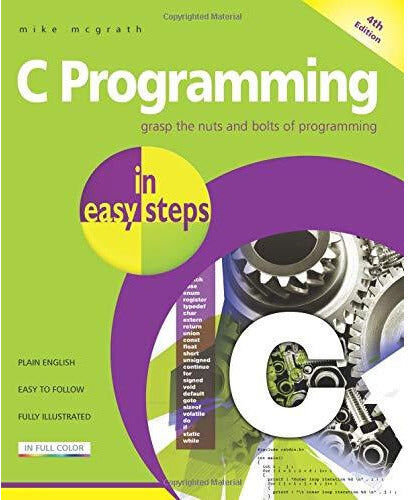
In Easy Steps Limited C Programming In Easy Steps 4th EditionC Programming in easy steps has an easy-to-follow style that will appeal to anyone who wants to begin programming in C, from programmers moving from another programming language, to the student who is studying C programming at school or college, or to those seeking a career in computing who need a fundamental understanding of procedural programming. C Programming in easy steps begins by explaining how to download and install a free C compiler so that you can quickly begin to create your own executable programs by copying the book's examples. You need have no previous knowledge of any programming language so it's ideal for the newcomer to computer programming. Each chapter builds your knowledge of C. C Programming in easy steps contains separate chapters on the major features of the C language. There are complete example programs that demonstrate each aspect of C together with screenshots that illustrate the output when that program has been executed. The sample code provided all has colored syntax-highlighting for clearer understanding. By the end of this book you will have gained a sound understanding of the C language and be able to write your own C programs and compile them into executable files that can be run on any compatible computer. Fully updated and revised since the third edition, which was published in April 2009.5,49 £*Shipping: 2,99 £Secure redirect to the provider
-
Universal Innovations Sahara Standard Patio Heater CoverKeep your patio heater protected from the elements all year round with a durable all-weather cover.The Sahara Patio Heater Cover is made from a heavyweight material and includes a waterproof inner lining, making it water and fire retardant. It has a full-length zip for easy fitting. Using thiscover will help to keep the gas nozzle and venturi free from dust and insects. This patio heater cover is the perfect companion for your 13kW Sahara Patio Heater and is suitable for most standard-sized patio heaters.43,56 £*Shipping: 5,00 £Secure redirect to the provider
-
How do you calculate the braking distance, the braking process, and the braking deceleration?
The braking distance can be calculated using the formula: braking distance = (initial velocity^2) / (2 * deceleration), where the deceleration is the rate at which the vehicle slows down. The braking process involves the driver applying the brakes, which causes friction between the brake pads and the wheels, leading to a decrease in the vehicle's speed. The braking deceleration can be calculated by dividing the change in velocity by the time it takes for the vehicle to come to a complete stop. **
-
How do you calculate the braking time and braking distance?
Braking time and braking distance can be calculated using the formula: Braking distance = (initial velocity^2) / (2 * deceleration) Where initial velocity is the speed of the vehicle before braking, and deceleration is the rate at which the vehicle slows down. Braking time can be calculated by dividing the braking distance by the initial velocity. These calculations are based on the assumption of constant deceleration, and may vary depending on factors such as road conditions and the vehicle's braking system. **
-
What are the differences between braking to walking speed and braking?
Braking to walking speed typically involves gradually reducing speed until coming to a complete stop, whereas braking refers to the act of slowing down a moving vehicle. When braking to walking speed, the goal is to smoothly decelerate without any sudden stops, while braking may involve more forceful actions to slow down quickly. Additionally, braking to walking speed is often used in situations where a vehicle needs to stop at a precise location, such as at a crosswalk or intersection. **
-
How do you calculate braking time and braking distance in physics?
In physics, braking time and braking distance can be calculated using the equations of motion and the principles of kinematics. The braking time can be calculated using the equation t = v/u, where t is the braking time, v is the final velocity, and u is the initial velocity. The braking distance can be calculated using the equation d = (v^2 - u^2) / (2a), where d is the braking distance and a is the deceleration. These equations take into account the initial and final velocities, as well as the deceleration of the object to determine the braking time and distance. **
Similar search terms for Braking
-
EaseUS Data Recovery Wizard 18 ProEaseUS Partition Master 18.0 Professional is a powerful and versatile tool for partition management on Windows systems. Designed for home and professional users, this software offers a range of advanced features to optimise hard disk usage and improve system performance. Key Features Complete Partition Management: Create, resize, move, merge, delete and hide partitions with ease. EaseUS Partition Master allows you to manage partitions without data loss, ensuring a smooth and secure experience. Disk Cloning: Clone entire disks or individual partitions to easily transfer data from one drive to another. This function is especially useful when upgrading to new hard disks or SSDs. Partition Recovery: Recovers partitions lost or damaged as a result of accidental deletions, Windows upgrades or virus attacks. The recovery function is quick and easy, allowing data to be restored in just a few clicks. Performance Optimisation: Supports 4K alignment of SSD partitions to improve read and write performance, ensuring your system performs at its best. Advanced Conversion: Convert disks and partitions between MBR and GPT without formatting, making it easy to upgrade to Windows 11 and manage large disks. File System Check and Repair: Quickly checks the file system for errors and bad sectors, restoring disk functionality efficiently. Bootable Media Creation: Create WinPE bootable media to solve system boot problems or perform partition management tasks without booting Windows. Intuitive Interface: The user interface is designed to be simple and intuitive, making access to all features easy even for novice users. Why Choose EaseUS Partition Master 18.0 Professional? EaseUS Partition Master 18.0 Professional stands out for its combination of advanced functionality and ease of use. It is an ideal solution for anyone who wants to manage their disks effectively, whether they are home users or IT professionals. Competitively priced and with free updates for life, it is an excellent investment for optimising data management. Choose EaseUS Partition Master 18.0 Professional for stress-free partition management and to ensure that your system is always running at peak capacity. Don't let disk management become a hassle; trust EaseUS for a complete and reliable solution.55,90 £*Shipping: 0,00 £Secure redirect to the provider
-
HP Ultrium 6 LTO Data Cartridge PurpleLTO Ultrium 6 data cartridge with 6.25 TB compressed capacity and 846 m tape length, featuring Metal Particle technology for reliable long-term data storage. Compatible with HP StoreEver and MSL library systems. Includes write-on labels and comes with a limited lifetime warranty.66,49 £*Shipping: 0,00 £Secure redirect to the provider
-
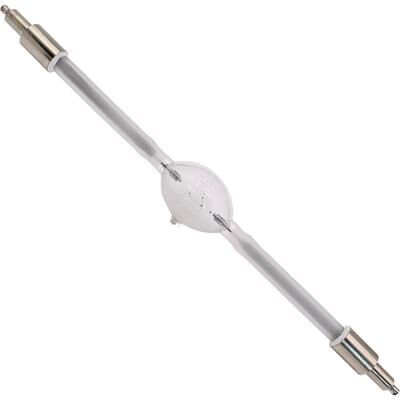
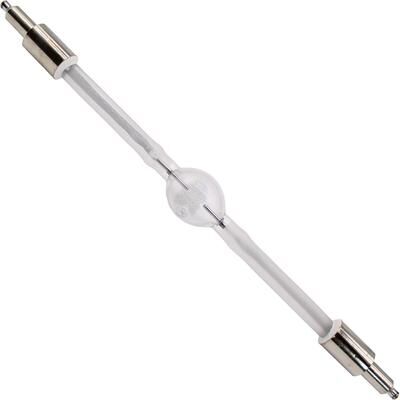
Jaspertronics™ High-Performance HMI 4000W Lamp - 7000K Daylight, CRI >90, 395,000 Lumens, Hot Restrike, DXS Technology for Studio, TV, Film & Solar Simulation ApplicationsThe High-Performance HMI 4000W Lamp is a cutting-edge lighting solution designed for studio, TV, film, professional photography, and solar simulation applications. With a 7000K daylight color temperature and CRI >90, this lamp ensures exceptional...228,99 $*Shipping: 0,00 $Secure redirect to the provider
-
Jaspertronics™ High-Performance HMI 2500W Lamp - 6000K Daylight, CRI >90, Hot Restrike, 240,000 Lumens, DXS Technology for Studio, TV, Film & Solar Simulation ApplicationsThe High-Performance HMI 2500W Lamp is engineered for professionals in the studio, TV, film, photography, and solar simulation industries. With a 6000K color temperature and CRI >90, this lamp ensures true-to-life color accuracy and daylight-like...198,99 $*Shipping: 0,00 $Secure redirect to the provider
-
Is braking a reflex?
Braking can be considered a reflex in certain situations. When a driver reacts to a sudden obstacle or hazard on the road by immediately pressing the brake pedal, it can be seen as a reflexive action. This is because the response is automatic and occurs without conscious thought. However, braking can also be a learned behavior, as drivers are trained to use their brakes in specific situations through practice and experience. Therefore, while braking can be a reflex in some cases, it can also be a learned and intentional action. **
-
What is the formula for braking acceleration and braking time in physics?
The formula for braking acceleration is given by \( a = \frac{v_f - v_i}{t} \), where \( a \) is the braking acceleration, \( v_f \) is the final velocity, \( v_i \) is the initial velocity, and \( t \) is the time taken to come to a stop. The formula for braking time can be calculated using the equation \( t = \frac{v_f - v_i}{a} \), where \( t \) is the braking time. These formulas are used to calculate the rate at which an object slows down when braking. **
-
What is the difference between a full braking and an emergency braking?
Full braking refers to applying the brakes with maximum force in a controlled manner to slow down or stop the vehicle. This can be done in response to normal traffic conditions or when approaching a stop sign or traffic light. On the other hand, emergency braking is a sudden and forceful application of the brakes in response to an unexpected hazard or danger, such as a pedestrian stepping into the road or a vehicle suddenly stopping in front. Emergency braking is typically done to avoid a collision and requires quick reflexes and a strong, immediate response from the driver. **
-
What is the difference between braking with a clutch and braking without?
Braking with a clutch involves pressing the clutch pedal while simultaneously applying the brakes, which disengages the engine from the transmission and allows the vehicle to coast to a stop. This method is often used in manual transmission vehicles to prevent stalling. On the other hand, braking without using the clutch means simply applying the brakes without disengaging the engine from the transmission, which can cause the vehicle to stall if the engine speed drops too low. In summary, the main difference is that braking with a clutch allows the vehicle to coast to a stop without stalling, while braking without the clutch can potentially lead to stalling if not done properly. **
* All prices are inclusive of VAT and, if applicable, plus shipping costs. The offer information is based on the details provided by the respective shop and is updated through automated processes. Real-time updates do not occur, so deviations can occur in individual cases. ** Note: Parts of this content were created by AI.